
Agency
case study
Agency
Challenge
When a global fintech payments platform needed to translate large-scale research into market-specific reports across 29 countries and 16 languages, it turned to Mahlab to redesign the process from the ground up.
The challenge was significant. Each year, the client produces multiple index reports drawing on data from approximately 14,000 merchants and 40,000 consumers. But localization relied on a fully manual process — teams working through thousands of rows of spreadsheet data, rewriting and reformatting content market by market. As the scope grew, the approach became slow, resource-intensive, and error-prone.
Approach
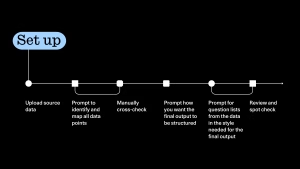
Mahlab’s solution was to redesign how global research moved through the organization end-to-end, combining human editorial judgment with AI-powered execution. This setup phase was deliberately human-led and iterative, grounded in editorial and data analyst judgement, context, and accountability.
The team built a human-led foundation that developed data maps, structured question frameworks, and training prompts. These efforts would be done before leveraging a large language model to scale content outputs across all markets. The workflow was validated in a single market first, then rolled out globally with human review built in at every stage.
Results
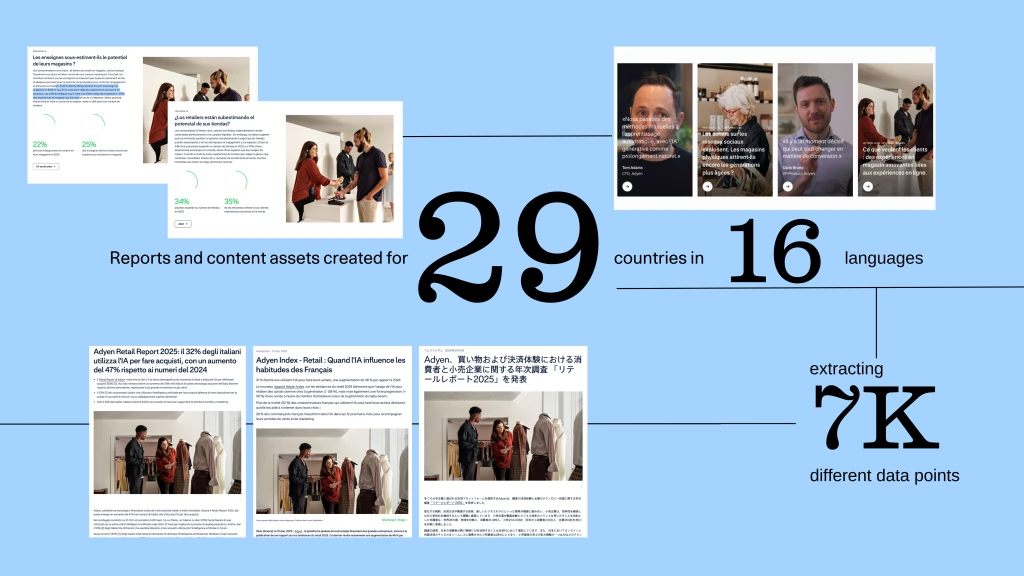
The results were striking: reports delivered four times faster than in previous years, a 3x year-on-year increase in engagement with report content, higher accuracy than previous manual outputs, and a significant reduction in administrative burden for local and regional teams.
The case study is a compelling model for any organization managing high-volume, multi-market content — demonstrating how AI can support scale without sacrificing accuracy or control.
To get more details about the process and the results, read the full case study at: How do you turn complex global data into local insight at scale?