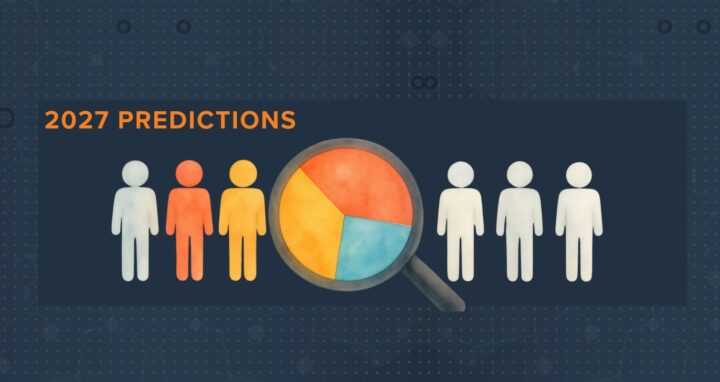
This insights post is a summary of the blog post published by Mahlab. View the full article at: Why stakeholder-first communications survives in an era of information instability.
The traditional playbook for influence has been fundamentally altered. Organizations have moved beyond simply “managing change” into an era defined by deep informational friction and profound human transformation. Not only for Austrialian companies, but stakeholders for companies around the globe are no longer just processing information differently. They’re redefining who and what deserves their trust in the first place, according to insights from Mahlab, Worldcom’s Australian partner.
- Trust Can No Longer Be Assumed: Skepticism has shifted from fringe mindset to global baseline. Eighty-one percent of people believe truth itself is an “endangered concept.” With AI’s rapid rise and misinformation now ranking as the world’s second-greatest global challenge, people exist in a persistent state of uncertainty. Trust that was once assumed is now continuously negotiated and easily fractured.
- Your Audience Is Actively Avoiding You: In a world overflowing with content, people are becoming far more intentional about what earns their attention and far quicker to tune out what doesn’t. Forty percent of people intentionally shield themselves from news, while 57% of younger audiences report total content exhaustion.
- AI Is Making Authenticity More Valuable: With 71% of people believing AI makes it nearly impossible to distinguish truth from fabrication, the climate of deep-seated skepticism means every message begins from a position of deficit. Transparency is no longer a competitive advantage. It’s become the minimum requirement for engagement.
- Connection Needs to Become More Intentional: People are more digitally connected than ever, yet increasingly isolated. More than 40% of young Australians report feeling lonely, reflecting a global trend where 1 in 6 people experience isolation. As the world becomes more overwhelming, people retreat into individualism and seek intentional engagement favoring interactions that meet specific needs without demanding heavy commitment.
- Earned Media Is Back: The media landscape is splintering, making it harder than ever to reach stakeholders. Australians now use an average of 6.5 social platforms monthly, while 57% admit to “second-screening.” AI search strongly favours credible, organic sources, with 95% of AI-cited links coming from non-paid content and 27% from earned media.
- The “Impact Gap” Is Widening: Many organizations still communicate as though trust is stable and attention is unlimited, creating an “Impact Gap”—a growing disconnect between what organizations say and what audiences actually hear, believe, or care about.
Closing the gap requires turning the traditional model on its head.
When communication begins with what audiences are experiencing and feeling—rather than what organizations want to say—it shifts from broadcast to meaningful connection. Curiosity becomes the bridge to relevance, trust, and impact.
To get more insight and details, read the full article at Why stakeholder-first communications survives in an era of information instability.