This insights post is a summary of the blog post published by RH Strategic Communications. View the full article at: Here’s How Modern PR Depends on AI Visibility and Digital Strategy.
Traditional communications strategies are reaching fewer people for more money. The organizations outperforming competitors aren’t spending more on digital communications—they’re spending on targeting the right people and building content that earns trust from both readers and the AI systems shaping what those readers find, according to RH Strategic, a Worldcom partner agency.
The environment has fundamentally changed. Precision is now more powerful than volume, and presence in AI-generated answers matters as much as placement in traditional media. Organizations that understand both reach the right people more efficiently, shape more of what those people encounter, and build credibility that compounds over time.
Precision Beats Volume
For years, communications logic was additive: cast a wide enough net and you’ll catch the people who matter. This model was always inefficient, spending most of the budget reaching people who would never act, never buy, never vote, or never decide.
Today’s alternative is precision before spend. This starts with audience research specific enough to act on. Instead of broad demographics, picture your audience tightly: a few hundred federal procurement officers, the staff of twelve Senate offices, or parents of high school seniors in three specific states. Once you know exactly who you’re after, you stop paying to reach everyone else.
The result is coordinated messaging that reaches a defined audience multiple times across multiple channels. Repetition changes minds. The economics follow: a precisely targeted program consistently outperforms a broad buy at a fraction of the cost.
This is what separates digital done well from digital done because everyone else is doing it. The research comes first. It tells you who matters, where they are, and what they already believe. Everything downstream—the targeting, the content, the channel mix—is built on that foundation.
There Is a Second Audience
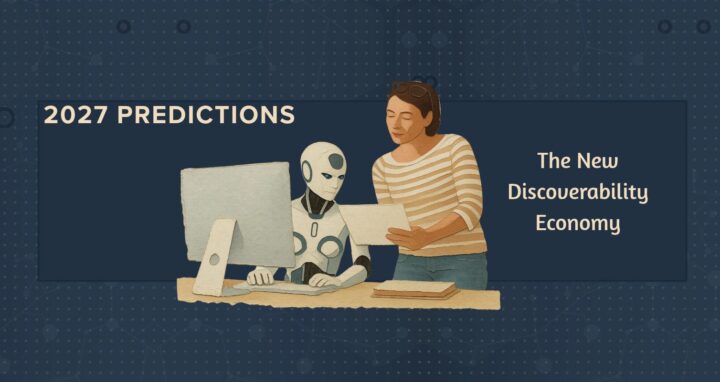
Most digital programs are designed for a human audience, but a second audience now shapes what those humans see. A Senate staffer opens ChatGPT and asks which voices on a policy issue are worth taking seriously. A prospective customer asks an AI assistant which companies actually lead in a particular space. In both cases, an answer comes back, and your organization is either in it or absent.
AI systems powering search answers and content recommendations now function as filters between organizations and the people they’re trying to reach. These systems decide which sources to trust, and that decision entirely shapes the answer the staffer or customer receives. If your organization is not in those sources, you are absent at the exact moment someone is forming an opinion.
This gap between organizations that understand this and those that do not is already widening and shaping decisions now.
The good news is that being present for AI systems requires the same foundational work as human targeting. Knowing what questions your audiences are asking is precisely what informs an AI visibility strategy. The research that tells you who to reach also tells you what content to build so that AI systems recognize your organization as a credible, authoritative source.
One Ecosystem, Not Two Strategies
Digital communications programs that do this well build one content ecosystem serving both audiences. A thought leadership piece that directly addresses a question your audience is actively asking does two things at once. It resonates with the person reading it and signals to AI models that your organization belongs in the answer the next time that question comes up.
An advocate community that generates genuine, experience-based content in places your audience already trusts does the same. It builds credibility with the human reader and creates the kind of distributed, authentic validation that AI systems treat as proof of authority.
The research drives the content. The content reaches people directly. And because that content is credible, specific, and built around real questions, it is also the content AI systems surface when those people go searching.
This is where the compounding effect emerges. Every piece of content that earns trust from a reader also strengthens your position with the systems mediating that reader’s next search. Organizations building this way aren’t just winning the moment—they’re making it progressively harder for competitors to displace them.
The Two Part Question
The question used to be whether you got coverage. The better question today comes in two parts: Did the right people encounter your message more than once from more than one platform? And Did the AI models shaping their research arrive at the same answer?
Organizations that can answer “yes” to both don’t spend more. They spend with more precision, build content that earns trust from both the people reading it and the models deciding what to show them, and treat digital as the infrastructure that makes everything else perform.
To get more details and insights, read the full article at: Here’s How Modern PR Depends on AI Visibility and Digital Strategy.