This insights post is a summary of the blog post published by The Pollack Group. View the full insight at: AI and the Creative Process: Enhancing Storytelling in PR.
Public relations has never been static. However, AI has entered the conversation as both a promise and a threat. Some worry it will dilute creativity. Others treat it as a shortcut.
However, the question isn’t whether communications professionals should use AI. The questions is how to use it strategically without sacrificing judgment, originality, or voice.
Gone are the days when AI is a novelty in public relations. It has become part of the daily work products for any PR firm. It shapes how content is discovered, summarized, and surfaced. The agencies who have adopted this tool are producing smarter, faster, and more strategic work. The ones aren’t might be falling behind.
Creativity in PR Starts Before the Writing
Public relations work begins studying audiences and analyzing cultural moments. Through this research, we shape narratives that align with business goals and long-term reputation. AI is a useful partner in this workflow. It can and should be used to map out key themes, compare messaging approaches, or compile background information on a trend or industry. Although AI can support work and fashion a framework, it cannot build instinct. It cannot understand nuance in the way a seasoned communicator can.
AI can help reduce the mental clutter of research and information gathering. Supporting that task leaves time for professionals to focus more energy on narrative, tone, and audience resonance. These are elements that an algorithm cannot replicate.
AI as a Visibility Tool, Not Just a Writing Tool
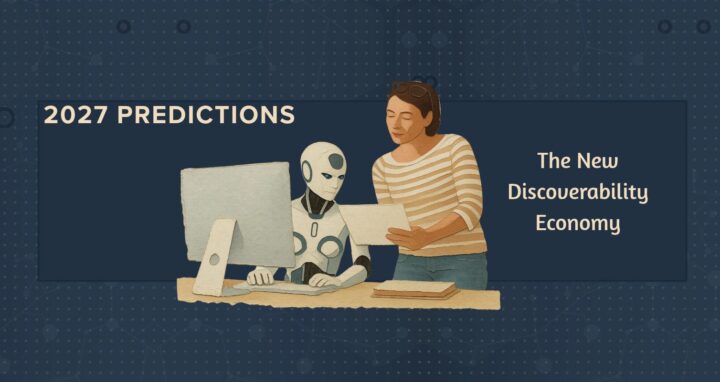
Using AI is not only for creating work product, but is a tool for search and discovery. Just as a PR writer will use if for research, consumers and business leaders use it for their own searches. Since AI will pull from digital sources that includes communities, websites and industry publications, that means brand messaging must be: clear, structured, consistent and explicit
If messaging is vague or fragmented, AI may misinterpret it. It also means you might lose visibility to competitors with sharper positioning and execution.
Enhancing, Not Replacing Storytelling
Storytelling remains human at its core. Storytelling in PR depends on understanding the full picture a client is trying to convey. Brand stories need to feel timely and relevant while emotionally connecting with a wide range of people. AI supports this process by helping identify what reporters are covering, which angles are oversaturated, and where coverage gaps still exist.
One of the most discussed concerns around AI in PR is the risk of losing a voice grounded in humanity. We need to build trust between the communicator and the audience by creating a balance among technology, creativity and credibility.
Never a Shortcut
Public relations has always evolved alongside technology. Email replaced fax. Social media reshaped amplification. Real-time analytics changed how we measure impact. Artificial intelligence is simply the next evolution. The future of PR storytelling is in our hands.
To get more insights and details, read the full post at: AI and the Creative Process: Enhancing Storytelling in PR.