Why Early Actions Matter
The initial phase of a disaster response determines how effectively lives are protected, damage is minimized, and stability is restored.
A core component of that early phase is coordinating charitable support. Without structure and transparency, aid systems quickly become chaotic, duplicative, or vulnerable to fraud.
During the COVID-19 response, fake charities, inflated contracts, and diverted donations became widespread. Globally, an estimated 10% of humanitarian aid is lost to fraud in high-risk environments; in complex or conflict-affected settings, losses may exceed 20%.
Early planning and centralized systems dramatically reduce abuse and ensure resources reach those most affected.
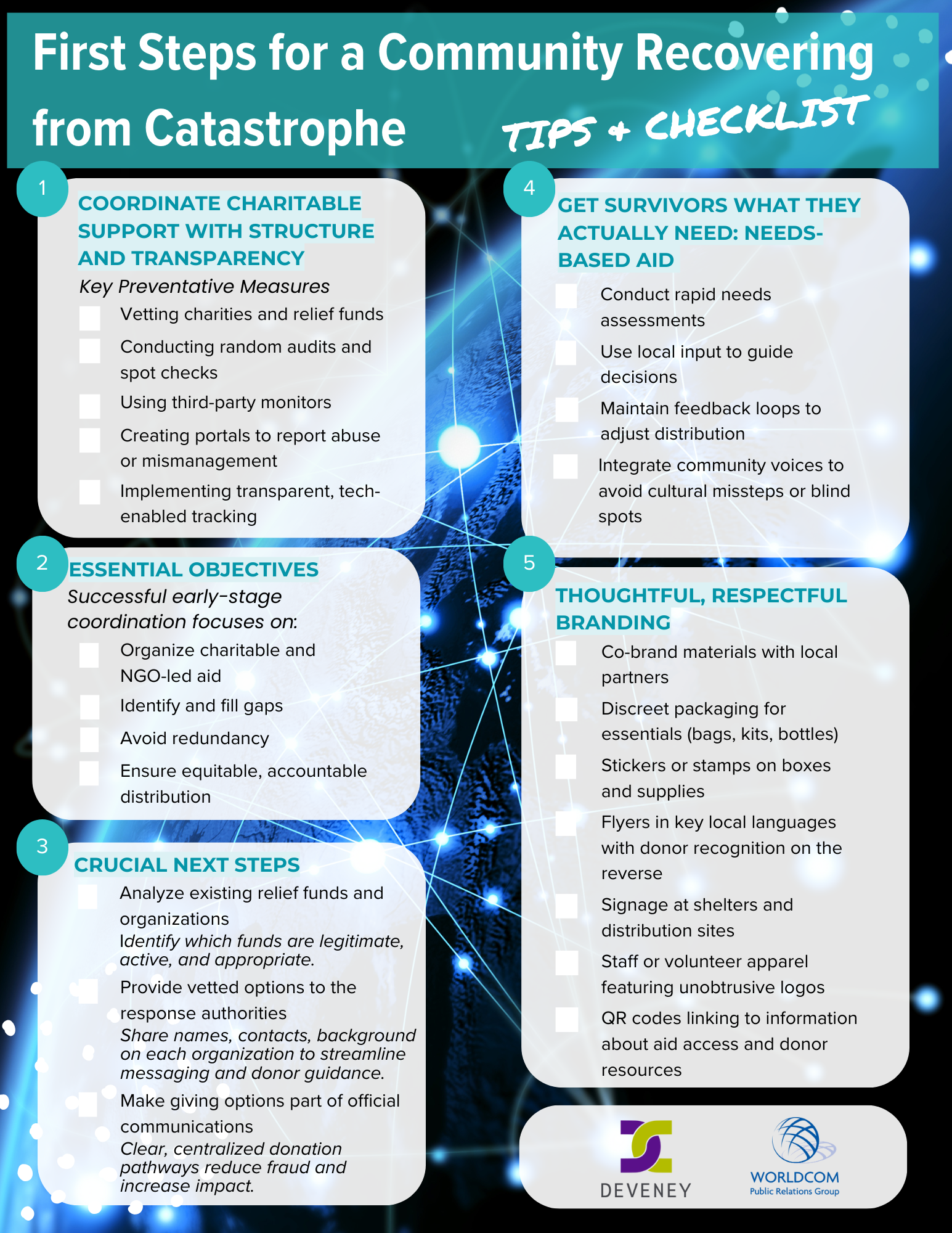
Key preventive measures include:
- Vetting charities and relief funds
- Conducting random audits and spot checks
- Using third-party monitors
- Creating portals to report abuse or mismanagement
- Implementing transparent, tech-enabled tracking
These safeguards should be established and communicated immediately, before mismanagement takes root.
Typhoon Devastation in Remote Alaskan Villages
The typhoon that struck Alaska’s western and northern communities was unprecedented in strength. Winds exceeded 150 mph, storm surge flooded homes and vital infrastructure, and ice-laden water swallowed entire stretches of coastline. Already facing accelerating erosion and climate pressure, communities such as Shishmaref, Kivalina, and Nome suffered catastrophic loss.
Despite the destruction, local resilience has been extraordinary. Residents worked collectively to salvage supplies, regroup, and support neighbors. Their determination underscores the urgent need for well-organized external aid that complements, not complicates, their efforts.
Where to Start: Essential Objectives
Successful early-stage coordination focuses on four goals:
- Organize charitable and NGO-led aid
- Identify and fill gaps
- Avoid redundancy
- Ensure equitable, accountable distribution
Immediate First Steps
- Analyze existing relief funds and organizations
Identify which funds are legitimate, active, and appropriate.
- Provide vetted options to response authorities
Share names, contacts, and background on each organization to streamline messaging and donor guidance.
- Make giving options part of official communications
Clear, centralized donation pathways reduce fraud and increase impact.
These steps establish order and consistency at a time when confusion can easily overwhelm.
Getting Survivors What They Actually Need
Raffetto’s client also asked about thoughtful branding, ensuring donors were recognized without distracting from survivors’ needs.
The guiding principle is simple: Aid must be needs-based, not supply-based. This means that aid should be distributed based on the specific needs of the affected community, rather than what is readily available or what donors want to give. This approach ensures that resources are used effectively and that the most pressing needs are addressed first.
“Dump and distribute” approaches often create waste and do not match the on-the-ground priorities. Instead, responders should:
- Conduct rapid needs assessments
- Use local input to guide decisions
- Maintain feedback loops to adjust distribution
- Integrate community voices to avoid cultural missteps or blind spots
Local participation improves effectiveness, prevents avoidable errors, and fosters trust.
Thoughtful, Respectful Branding
Branding matters in disaster relief, not for marketing, but for transparency, acknowledgment, and community confidence. Done correctly, it informs recipients of where help is coming from while maintaining dignity.
Effective elements include:
- Co-branding materials with local partners
- Discreet packaging for essentials (bags, kits, bottles)
- Stickers or stamps on boxes and supplies
- Flyers in key local languages with donor recognition on the reverse
- Signage at shelters and distribution sites
- Staff or volunteer apparel featuring unobtrusive logos
- QR codes linking to information about aid access and donor resources
Avoid flashy logos, political affiliations, or religious branding that may create tension, exclusion, or the appearance of self-promotion.
Feedback and Accountability
Effective relief depends on accurate, real-time information. Feedback mechanisms help identify new needs, cultural considerations, or instances of mismanagement.
Depending on available infrastructure, systems may include:
- SMS surveys
- Simple websites
- Community focus groups
- Written grievance processes
- Feedback boxes or information boards at shelters
Offering both high-tech and no-tech options ensures that every voice is heard, even when communications networks are down.
Addressing Gaps in Charitable Aid
An instructive example comes from our work with my dear friends, one of the finest agencies to be found, and Worldcom PR Group Partner, The Pollack Group for their client, CMR Construction & Roofing. After Hurricane Ida struck Louisiana’s River Parishes in 2021 with catastrophic force, CMR organized Ragin Country Crawl, a benefit concert supporting storm recovery.
While the designated charities were legitimate and effective, they appeared to cover only one of the four parishes most severely impacted. This gap was understandable—some parishes had no dedicated charitable organizations—but still problematic.
We recommended creating two new funds tailored to unmet needs:
- Louisiana River Parishes Hospitality Workers Support Fund
Assisting frontline service workers in St. Charles, St. James, and St. John the Baptist parishes.
- Louisiana River Parishes Recovery and Assistance Fund
Supporting long-term resilience and economic development.
Local leaders were engaged to ensure proceeds reached those most affected. These additions:
- Strengthened the event’s relevance
- Expanded promotional opportunities
- Provided compelling human stories
- Increased ticket sales
- Leveraged a strong regional identity
This approach ensured aid reached every impacted community, not just those with an existing charitable footprint.
Moving Forward
Disaster response happens quickly, but recovery unfolds over months and years. Early planning, transparent coordination, and community-centered systems make a measurable difference—ensuring that every voice is heard and every community is valued in the recovery process.
Todd Lynch reminded me of a reality about crises: There is a humanity and beauty that can arise out of disaster, which is why having the right things in place makes sure good people and good companies can do good things for good people in need. The compassion and altruistic desire to help those in need gets lost without sound logistics, planning, and infrastructure. The generosity of leaders and brands donating money, water, food; The generosity of the much needed corporate community; and the generosity of the paid and volunteer people who rush to service immediately or who stay until the work is done: will all be for naught if advance planning didn’t happen or if important initial steps aren’t taken when disaster strikes.
The scale of recent disasters – from Alaska to Louisiana – underscores a broader reality: climate change is intensifying extreme weather events. Communities already facing economic or geographic vulnerabilities are now on the front lines.
Yet these crises also reveal extraordinary resilience and solidarity. They remind us that coordinated support, thoughtful planning, and equitable recovery strategies are more important than ever, ensuring a fair and just recovery for all. Catastrophes will continue to test our preparedness. But with the right structures in place, communities emerge stronger and donors can trust that their contributions truly matter.